

Digital spaces are no longer just about access. They are about the quality of experience. People want interactions that feel instant, smooth, and relevant. As expectations rise, so does the demand for personalised virtual environments.
Artificial intelligence (AI) and edge computing power this transformation. Smart venues, business dashboards, and online platforms now adjust in real-time based on user behaviour and context. Together, these systems are shaping a new digital norm where everything aligns more closely with individual needs.
What Makes a Virtual Space Personalised?
At its simplest, a personalised virtual space adapts to the person using it. The layout, content, and functions shift according to how someone interacts with the system. It is less about flashy features and more about helping people achieve what they need quickly and with minimal effort.
Data drives much of this responsiveness. Platforms track clicks, habits, and previous choices to build a picture of what matters to each user. The more a system learns, the more accurately it can respond.
One clear example of this personalisation is seen in online roulette gaming. These platforms depend on fast graphics and quick reactions, but that alone is not enough. The true value comes from subtle personal touches such as game suggestions, interface settings, or feedback cues tailored to how each user plays. Edge computing strengthens this experience by processing actions locally, reducing lag, and making every spin feel smooth and responsive.
Personalisation in these virtual spaces goes beyond appearance. It is about creating experiences that feel like genuine interactions rather than pre-set machine outputs.
AI: The Engine Behind Understanding Users
Artificial intelligence plays a central role in making virtual spaces relevant. It does more than collect data. It studies patterns. Over time, it learns what users prefer, how they behave, and even when they are most active.
Instead of treating everyone the same, AI interprets intent. A user browsing for information might see a simplified layout, while someone trying to complete a task could be guided directly to the necessary tools. These decisions happen automatically, based on what the AI has observed.
Consider the example of a digital workspace. As employees log in, the system may prioritise dashboards, tasks, or communications that match their roles and behaviour. AI does the heavy lifting in the background, creating a smoother day without requiring users to adjust anything themselves.
What makes AI effective is not just its intelligence but its timing. It intervenes at moments that might otherwise be overlooked, adjusting the experience so it feels personal without becoming intrusive.
Edge Computing: Making Personalisation Instant
AI might be the brain, but edge computing gives it speed. Instead of sending data across extensive networks to be processed elsewhere, edge systems handle that information right where it’s created. This reduces delays and enables systems to react quickly.
Local processing is not only about speed. It improves reliability and keeps data closer to where it is generated. This is especially important in situations where privacy and uptime are essential. With edge devices in place, users do not experience delays or awkward pauses. They simply see immediate results.
Digital signage provides a good example. A display in a retail space can change depending on the age group or foot traffic nearby. Instead of relying on distant servers, edge computing enables instant updates, keeping content relevant without slowing performance.
Such responsiveness is essential in any environment where people expect technology to work seamlessly. Edge computing meets that expectation by ensuring systems run smoothly on the ground.
AI and Edge: Building Smart, Adaptive Spaces Together
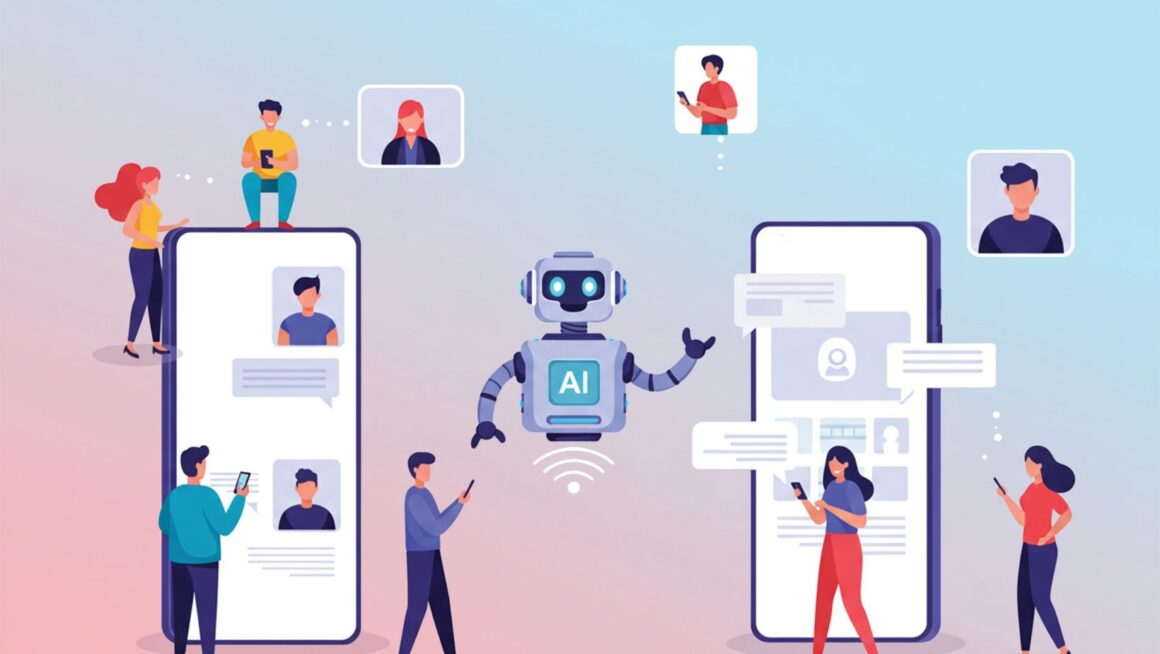
Separately, AI and edge computing address different challenges. Together, they create environments that feel dynamic and aware. AI interprets context, while edge computing delivers responses with minimal delay.
For instance, a stadium can use AI to monitor crowd movement and sound levels. If energy builds in one area, nearby edge systems can immediately adjust screens, music, or lighting to enhance the moment. This makes the venue feel like it is reacting naturally to the mood of the crowd.
The same principle applies to homes. Lights, heating, and media can shift based on who is in the room and what they are doing, all without a manual command.
The outcome is a digital infrastructure that behaves more like a responsive partner than a static toolset. This changes how people engage with technology across both public and private spaces.
Business Dashboards and Workspaces That Respond to Users
In many workplaces, dashboards and software tools are central to decision-making. When these systems adapt to each role, productivity improves.
AI tracks which features different employees rely on and fine-tunes the interface to prioritise them. Edge computing ensures those updates load instantly, without lag or error.
Imagine a sales manager viewing real-time performance numbers while a new employee sees onboarding tips on the same platform. This level of personalisation saves time and reduces confusion, which is especially valuable in fast-moving industries.
As teams grow and their tasks evolve, these tools adapt too. There is less need for retraining when systems adjust automatically to match routines and priorities.
Final Words
AI and edge computing are turning digital environments into experiences that feel tailored, fast, and surprisingly human. Instead of granting users simple access, these systems actively shape how technology looks and functions in each moment.
What was once considered a future trend is now becoming a part of daily life. From online roulette gaming to business platforms, the technology is already here, working quietly in the background to simplify tasks. The best part is that when it works well, people barely notice the systems at all. They only notice how much better everything feels.